
Part 2 of 3 in the series Your New Pool, Protected: The Owner's Playbook for the First Year and Every Season After.
The first month after your pool is built is all about protecting soft, curing surfaces. Once you clear that window, the job changes. Now you are managing water that shifts every single day, whether you look at it or not.
This series was shaped in part by insights from H2O Pool Service, whose field experience with residential pools helped us focus on the small weekly habits that quietly prevent the expensive problems most owners only notice after the damage is done.
Water That Changes While You Sleep
Pool water is not a finished product. It is a live system reacting to sun, rain, wind, swimmers, and the surface it touches. Sunlight burns off chlorine. Rain drops your pH and dilutes stabilizer. Leaves add phosphates. Sunscreen and sweat eat sanitizer. Even the plaster or pebble finish is slowly trading minerals with the water.
That means water is either being pushed toward balance by you, or it is drifting on its own. Drifting always heads the same direction: toward algae, staining, scale, or corroded equipment. Nothing in a pool stays neutral.
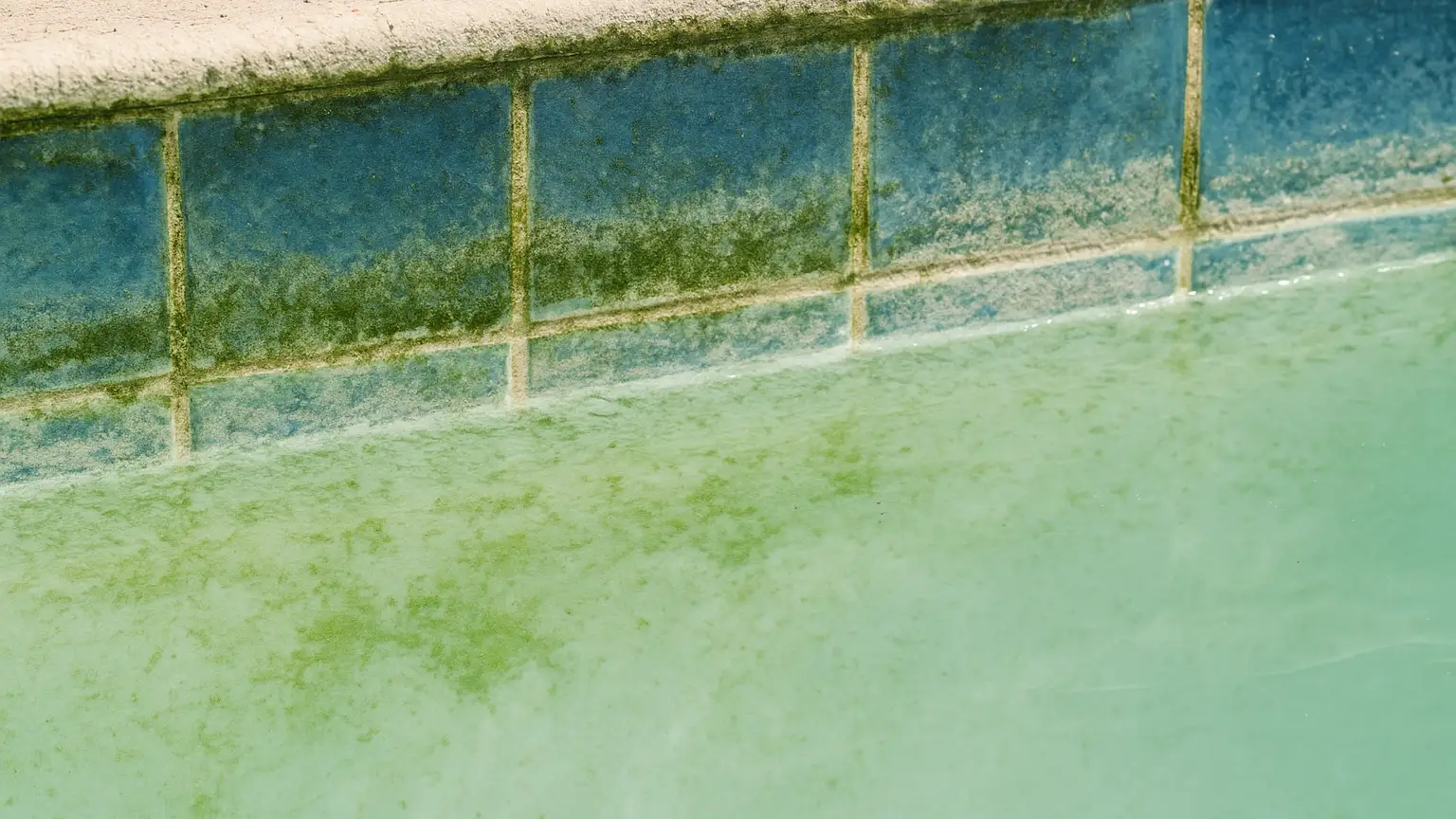
Here is the part most new owners miss. Green water is not the first sign of trouble. It is roughly the fifth. Before algae blooms, chlorine dropped, pH climbed, and the filter started falling behind. A weekly routine catches those earlier stages, when the fix costs a few dollars instead of a few hundred.
Building A Cadence You Can Actually Keep
Good pool care is not about spending hours poolside. It is about hitting the same short list on roughly the same day each week. Timers and smart panels take some of the guesswork out by running equipment on a schedule, but the weekly pass you make yourself is still what catches small problems early. Predictability beats intensity every time.
Two Minutes, Most Days
Skim the surface, glance at the water line, and check that your returns are pushing water with normal force. That is it. Weak return flow is your earliest warning that a basket or filter needs attention, and it takes ten seconds to notice.
The Weekly Block
Set aside thirty to forty minutes once a week and work in this order:
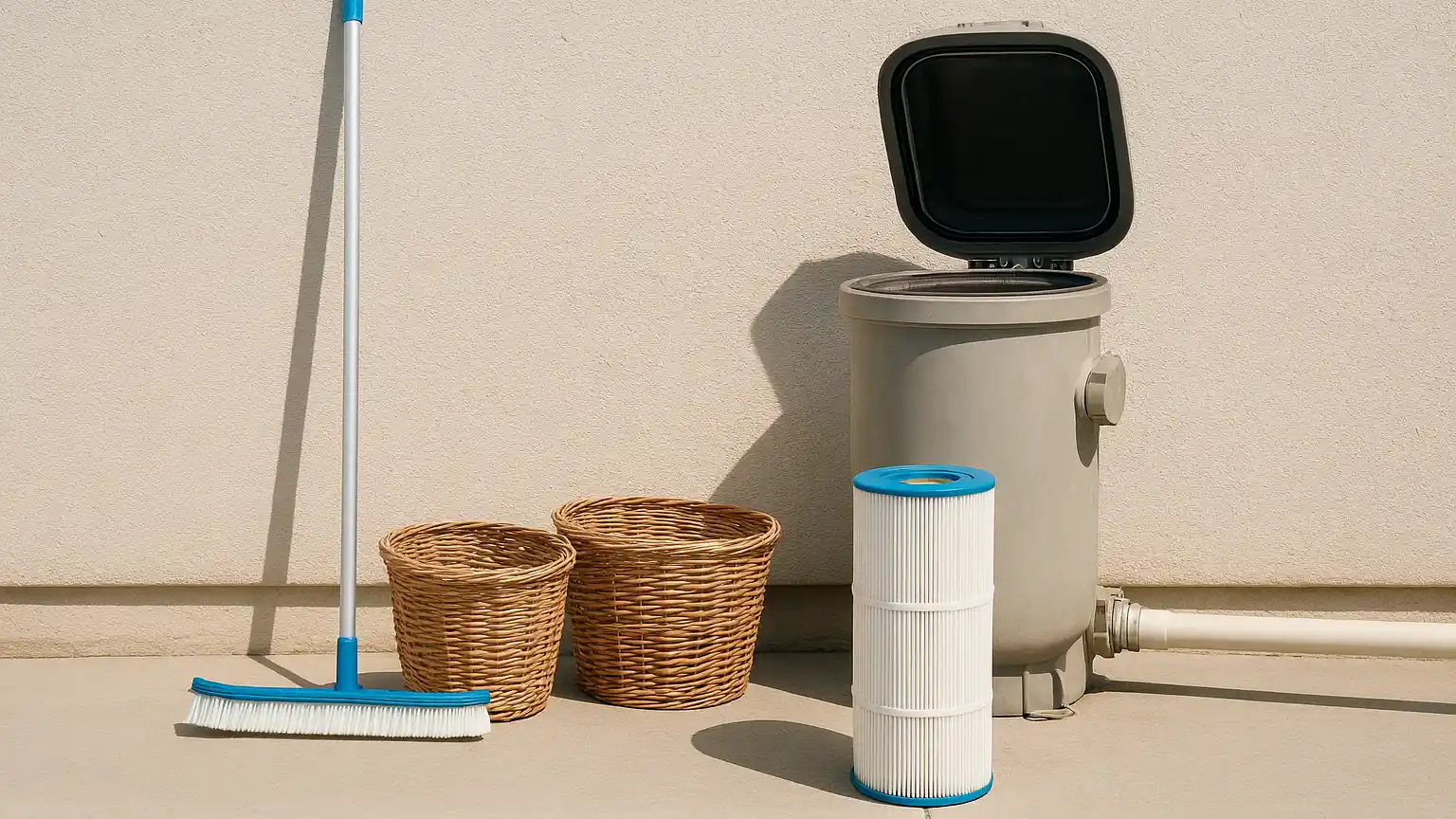
- Empty the skimmer and pump baskets first. Cleaning them last means you tested and dosed while your circulation was choked.
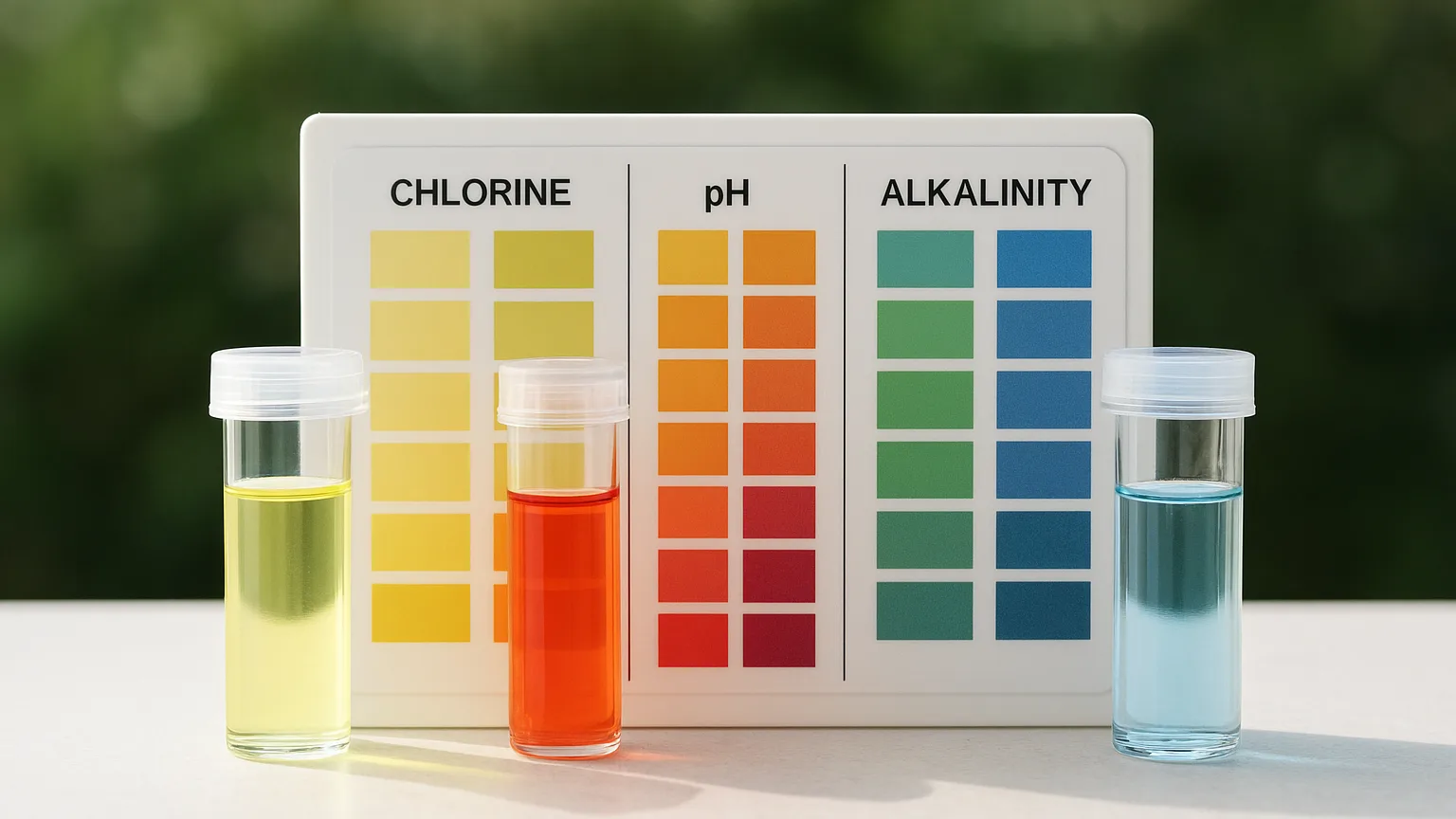
- Test the water for chlorine, pH, total alkalinity, calcium hardness, and stabilizer.
- Adjust alkalinity before pH. Alkalinity is the buffer. Chase pH first and you will be chasing it again in two days.
- Brush the walls, steps, and behind ladders, then the floor toward the main drain.
- Vacuum or run the cleaner after brushing, so you are picking up what you just loosened.
- Check filter pressure and write the number down.
- Dose sanitizer last, with the pump running, so it distributes instead of settling.
Order matters more than people expect. Owners who follow a consistent swimming pool maintenance sequence spend far less time correcting problems than owners who dose randomly and hope. Habits beat heroics.
Making Sense Of The Numbers You Pull
Test strips are fine for a quick pulse check. For the weekly reading, use a liquid drop kit or take a sample to a shop with a photometer. Strips fade, get damp, and quietly lie to you.
These are the numbers worth knowing by heart:
- Free chlorine: 2 to 4 ppm. Below 1 ppm, algae has an open door.
- pH: 7.4 to 7.6. High pH causes scale and cloudy water. Low pH etches plaster and corrodes metal.
- Total alkalinity: 80 to 120 ppm. This is what keeps pH steady.
- Calcium hardness: 200 to 400 ppm for plaster and pebble finishes. Too low pulls calcium out of your surface.
- Cyanuric acid: 30 to 50 ppm. Too little and sun destroys chlorine. Too much and chlorine goes lazy.
Sample Where It Counts
Collect water elbow deep, away from returns and skimmers, on the shady side of the pool. Surface water near a jet is freshly dosed and will read high. That single habit fixes more phantom chemistry problems than any product.
Respect The Order Of Operations
Add one thing at a time. Wait for circulation, usually four to six hours, before adding the next. Dumping acid and calcium in together can cloud the pool for days. The same patience applies to swimming after shocking, since chlorine needs time to circulate and settle back into a safe range. Weather matters too, since heavy storms dilute everything and often lead to cloudy pool water after rain that owners mistake for an algae problem and treat far too aggressively.
<<
The Mechanical Side Of Clear Water
Chemistry gets all the attention, but mechanical care is what keeps chemistry working. A perfectly balanced pool with a clogged filter will still turn on you.
Brushing Is Not Optional
Algae starts as an invisible film in low flow spots: behind the ladder, in corners, under the steps, along the tile line. Chlorine struggles to penetrate that film. Brushing breaks it open so sanitizer can reach it. Skip brushing for three weeks in summer heat and you will see the shadowy patches begin, which is exactly how black stains on vinyl pool surfaces and stubborn plaster spotting get their start.
Baskets Earn Their Keep
A half full skimmer basket cuts flow more than most owners realize. Less flow means less filtration, weaker chemical distribution, and a pump working harder for nothing. Empty both baskets weekly, more often during leaf drop or after windy days.
Know Your Clean Filter Pressure
Write down the pressure gauge reading right after a cleaning. When pressure rises 8 to 10 psi above that baseline, it is time to backwash or clean cartridges. Guessing leads to two mistakes: backwashing constantly, which wastes water and never lets a sand bed work properly, or waiting until flow drops so far that the pool clouds.
Let The Pump Run Long Enough
Aim for a full turnover of your pool volume each day, which usually means eight to twelve hours on a variable speed pump running at lower speed. Longer and slower filters better and costs less than short bursts at full power. Scheduling this reliably is one reason many owners eventually add pool automation so run times, valves, and sanitizer output stay consistent without daily attention.
When Another Jug Of Chemicals Is The Wrong Answer
There is a point where adding product stops helping and starts hiding a real problem. Recognizing that line saves both money and equipment.
Signals That Mean Stop And Call
- Chlorine will not hold for more than a day, even after shocking. Usually a stabilizer imbalance or a heavy organic load.
- Cloudiness that returns within 24 hours of clearing. Often a filter media or flow issue, not a chemistry issue.
- Pressure that spikes fast after cleaning, or drops suddenly. Suggests a blockage or an air leak on the suction side.
- Grinding, whining, or rattling from the pump. Bearings do not heal.
- Stains spreading in a pattern, especially rust colored or gray. Metals or surface issues need identification before treatment.
- pH that refuses to stay put even with correct alkalinity.
The habit that separates smooth first years from rough ones is documenting. Keep a notebook or phone note with the date, your five readings, what you added, and the filter pressure. Three weeks of entries turns a confusing pool into an obvious pattern, and it gives a technician real information to work from. This is the same discipline that protected your surfaces during first 30 days decide everything, just carried forward into normal operation.
Seasonal Shifts To Watch For
Your routine does not change much, but the intensity does. Peak summer means faster chlorine burn and more frequent brushing. Spring pollen loads the filter. Fall drops debris into every basket you own. As temperatures fall, chlorine demand drops and run times can shorten, which sets you up for the shutdown steps covered in beat the freeze before the first hard cold snap arrives.
The Quiet Payoff Of Boring Consistency
A pool does not reward drama. It rewards repetition. Skim, test, adjust alkalinity then pH, brush, empty the baskets, check the gauge, dose last. Do that on the same day every week and you will spend most of the swim season simply enjoying clear water instead of fighting to get it back. The owners who struggle are almost never the ones who did too little in one big way. They are the ones who skipped small things repeatedly until the water made the decision for them.
Your test kit, a brush, and a notebook will outperform any shelf of specialty products. Trust the numbers, respect the order of operations, and treat weak return flow or a stubborn reading as a message rather than a nuisance. When something refuses to respond to correct dosing, that is the moment to bring in a professional instead of adding one more jug and hoping. Handle the weekly rhythm well, and the only real challenge left on the calendar is getting your pool safely through the cold months ahead.
Recent Posts