Part 3 of 3 in the series Your New Pool, Protected: The Owner's Playbook for the First Year and Every Season After.
Once the weekly rhythm of testing, brushing, and basket cleaning becomes second nature, the next thing that can undo all that work is the weather. A pool that looked perfect in October can be leaking behind a wall by January, and the culprit is almost never the water in the pool. It is the water sitting in the pipes.
This series was shaped in part by the field experience of H2O Pool Service, whose technicians see the same pattern every year: the pools that survive a hard freeze are the ones where somebody thought ahead by a week, not the ones where somebody reacted overnight.
What Frozen Water Does to Buried Pipes
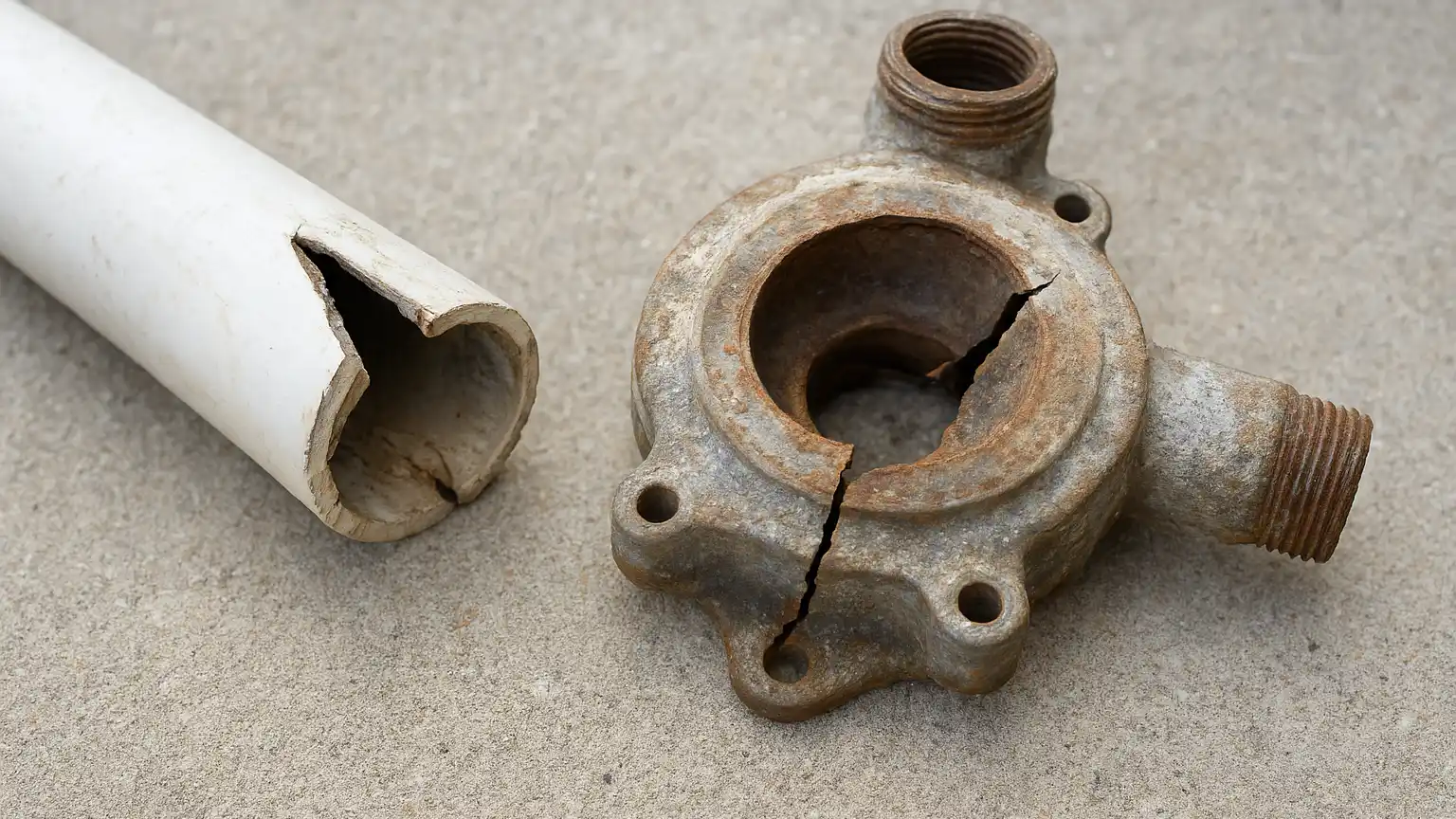
Water expands roughly nine percent when it freezes. Picture that inside a two-inch PVC line buried under your decking, inside the cast iron volute of a pump, or in the copper heat exchanger of a heater. There is nowhere for the pressure to go, so something splits.
Here is the part most new owners miss. The crack often does not show up as a flood. It shows up in spring as a slow water loss you cannot explain, a pump that will not hold prime, or a heater that trips out under pressure. By then the repair means breaking concrete or swapping out cracked hardware, and most manufacturer warranties specifically exclude freeze damage because it is considered preventable.
The other quiet cost is chemistry. Low calcium water pulls minerals out of plaster, and high pH with high calcium leaves a rough scale ring at the tile line. Neither one heals itself when the weather warms up.
Reading the Forecast Like a Pool Pro
Do not wait for the freeze warning. Watch for the first night forecast in the mid thirties, then work backward. You want your shutdown finished before the ground gets cold, because blowing lines in 28 degree air with numb hands is how mistakes happen.
- Two weeks out: get chemistry dialed in and balanced, not just chlorinated.
- One week out: deep clean the pool, brush the walls, and clean the filter.
- Three days out: lower the water, blow the lines, plug the returns.
- Freeze night: walk the equipment pad one more time with a flashlight.
Closing Chemistry That Holds for Five Months
Closing chemistry is different from summer chemistry. You are not keeping water swimmable for a weekend. You are keeping it stable and non-aggressive for four to five months with no filtration and no daily attention.
Aim for pH between 7.4 and 7.6, total alkalinity between 100 and 120 ppm, and calcium hardness in the 200 to 275 ppm range for plaster and pebble surfaces. Slightly higher alkalinity going into winter gives you a cushion, because rain and snowmelt will push pH down over time. Chlorine should be 3 to 5 ppm at closing, higher than your normal target, since there is nothing generating it once the system is off.
The Order That Actually Matters
Adjust alkalinity first, then pH, then calcium, then add your closing chlorine or non-chlorine winterizing kit. Out of order means chasing your own tail. Never add shock and algaecide in the same hour either, because high free chlorine will burn off most algaecides before they do their job. Give the water at least one full day of circulation after your final adjustments so everything mixes evenly. If you have been following the habits from water is turning on you, this becomes a small tune-up rather than a rescue mission.
Don't Skip the Deep Clean
Every leaf, twig, and speck of dirt left on the floor becomes an organic stain over a winter of sitting. Brush the walls and steps, vacuum the floor, and empty every basket, paying attention to the shallow-end corners and behind the ladder where debris hides. Owners who follow structured cleaning intervals, similar to what is covered in this guide on how often should you clean a pool, tend to open in spring with far less staining to fight.
Getting Every Drop Out of the Plumbing
This is the step that separates a pool that survives from a pool that gets repaired. The goal is simple: no standing water anywhere it can freeze and push against something rigid.
Start by lowering the water level. With a mesh cover, drop it 12 to 18 inches below the skimmer. With a solid cover, 3 to 6 inches is usually enough, because solid covers hold rain and snow on top instead of letting it through. Tile lines and vinyl liners both dislike being drained too far, so do not overdo it.
The Sequence
- Shut off power at the breaker, not just the timer.
- Open every drain plug on the pump, filter, heater, and chlorinator. Save the plugs in a labeled bag inside the pump basket.
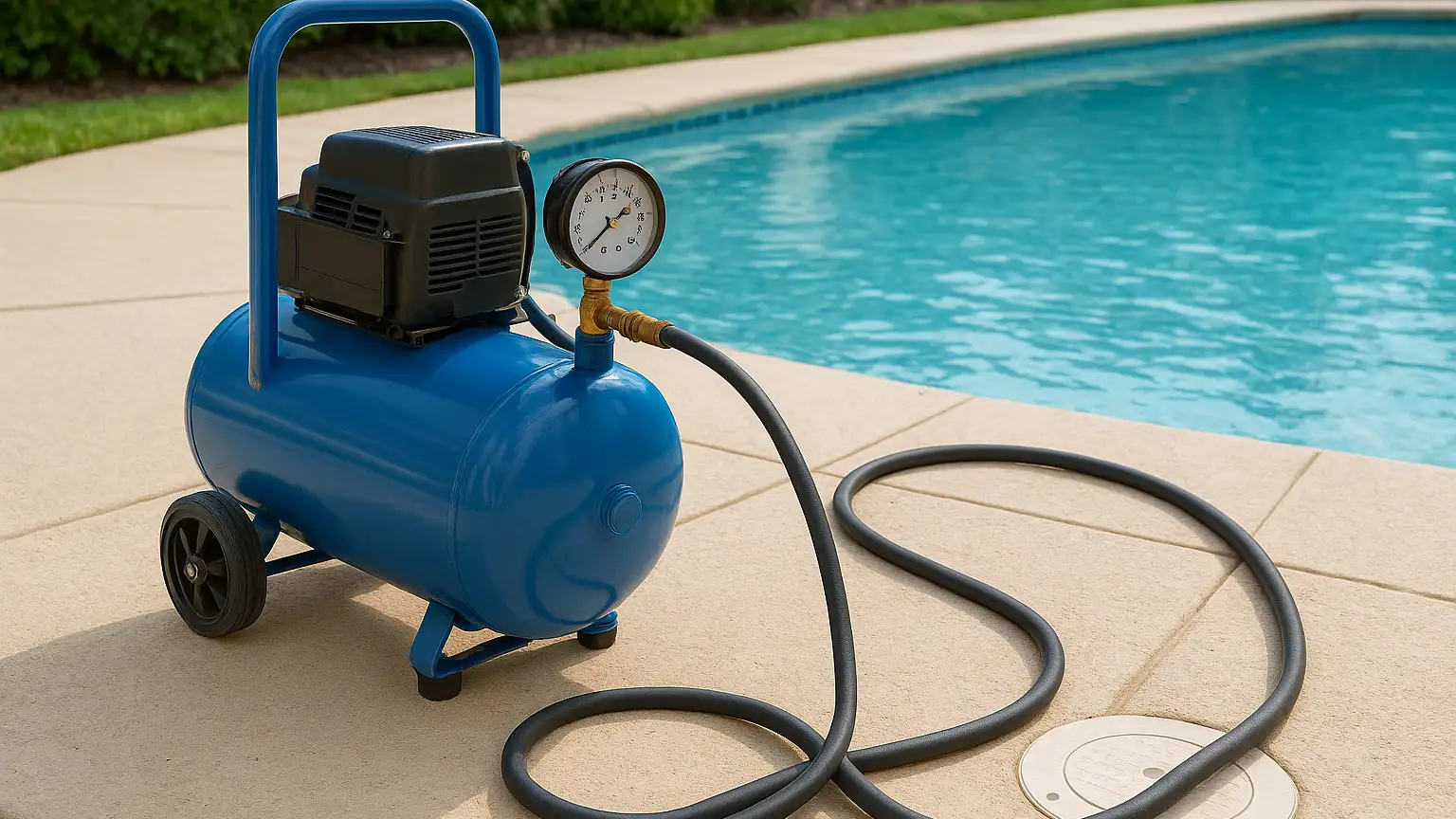
- Use a shop vac or blower on the suction side to push water out of the skimmer and main drain lines. You will see bubbles at the pool.
- Plug the skimmer with an expansion plug or a Gizmo, which gives ice somewhere to expand into.
- Blow the return lines until air comes through, then insert threaded plugs while air is still moving.
- Add pool-grade antifreeze to lines you cannot fully clear, especially long runs and uphill sections.
Equipment That Needs Individual Attention
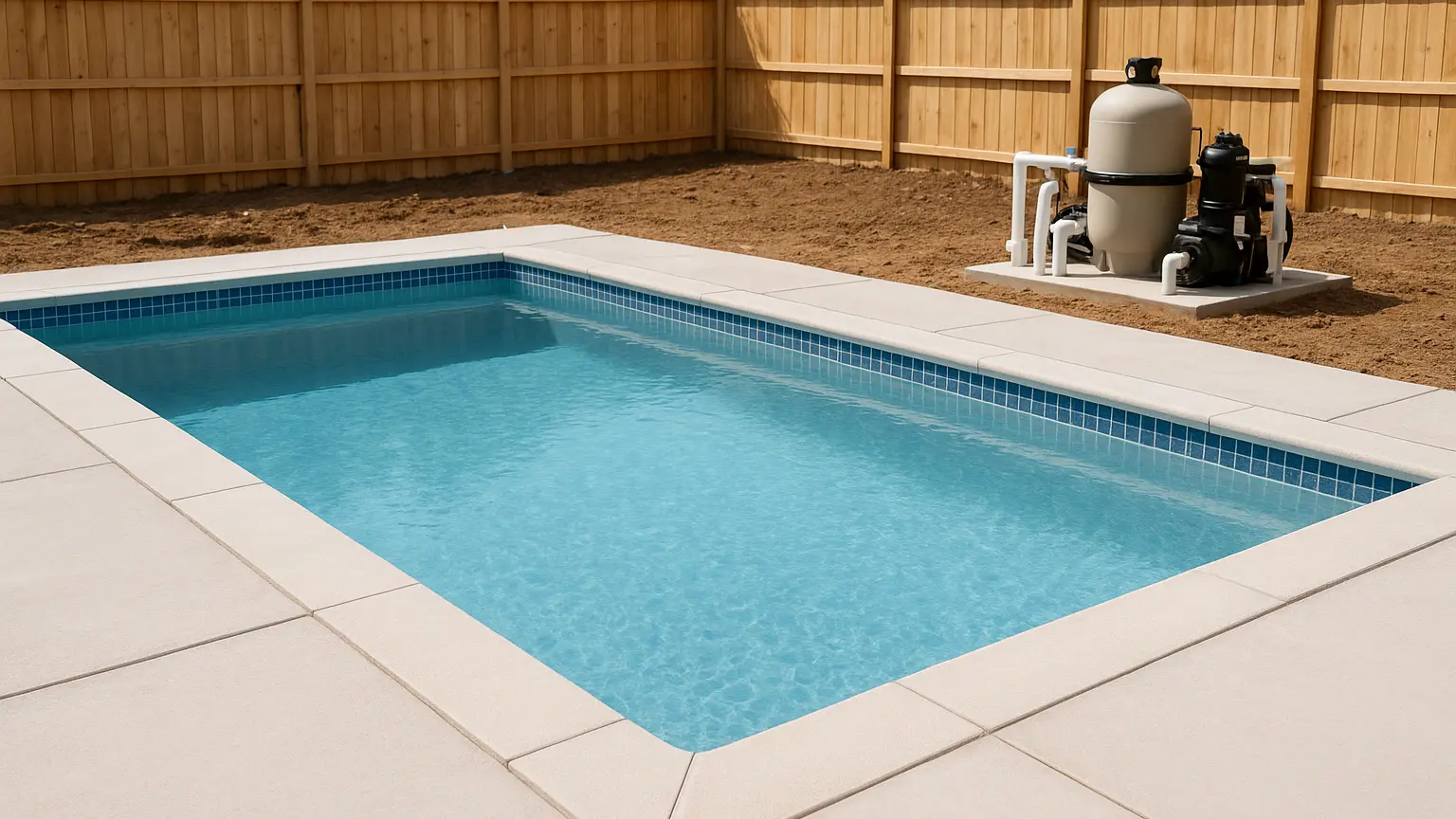
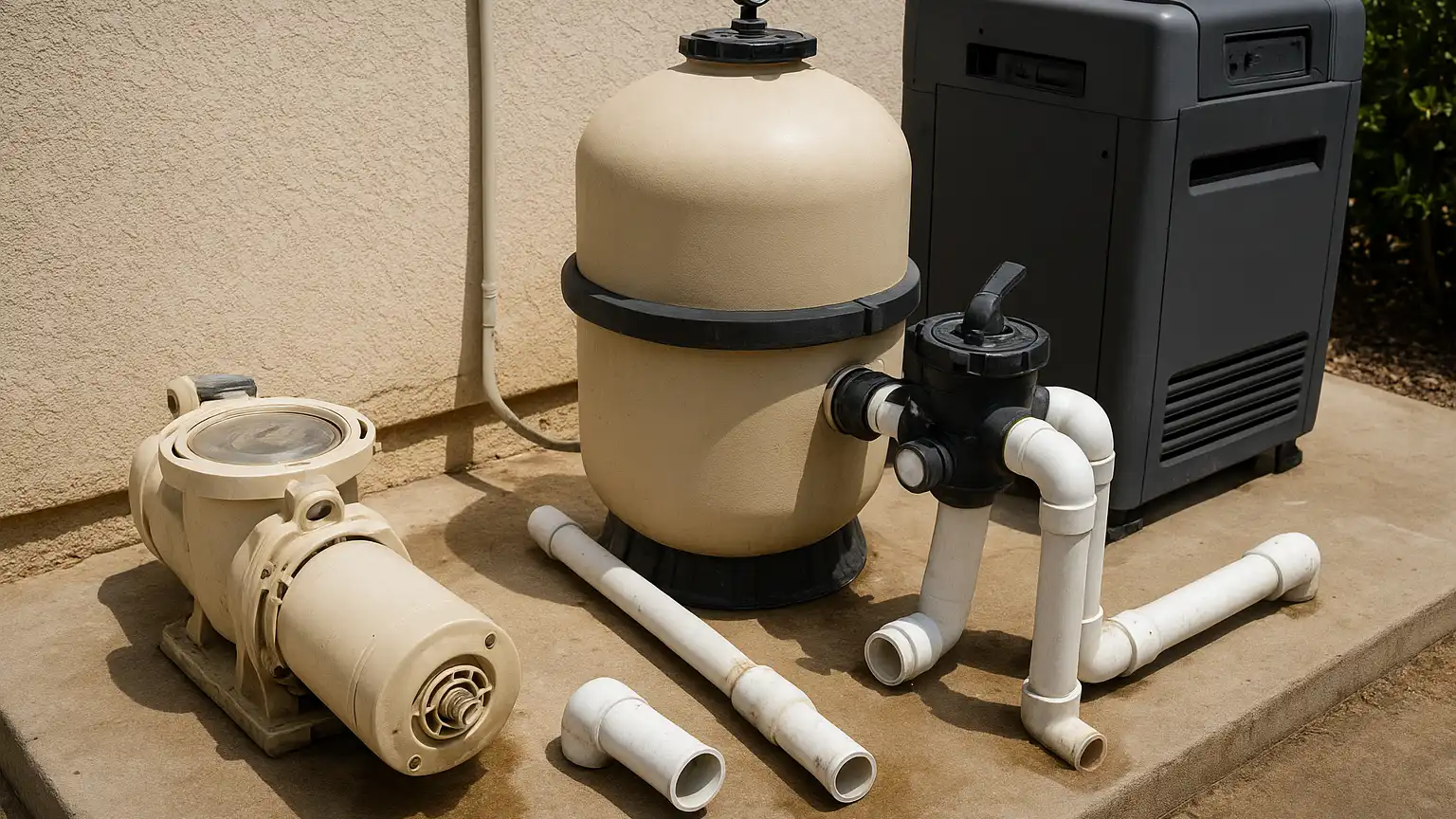
Heaters are the most expensive thing on the pad and the least forgiving. Remove both drain plugs, tilt if possible, and leave the pressure switch loose so trapped water can escape. Cartridge filters get pulled, rinsed, dried, and stored indoors. Sand and DE filters get drained, with the multiport valve left in the winterize position so the internal spider gasket is not under tension. Salt cells should be removed, inspected, and stored dry.
Pumps come apart. Remove both plugs, take off the lid, and turn the impeller by hand to move out any last cupful. A cracked pump housing is one of the most common freeze failures, and in many cases the damage means equipment replacement rather than a simple gasket fix.
Picking the Cover That Matches Your Patience
A cover is not just a lid. It controls how much light reaches the water, how much debris lands in it, and how much of a mess you inherit in spring.
Mesh Safety Covers
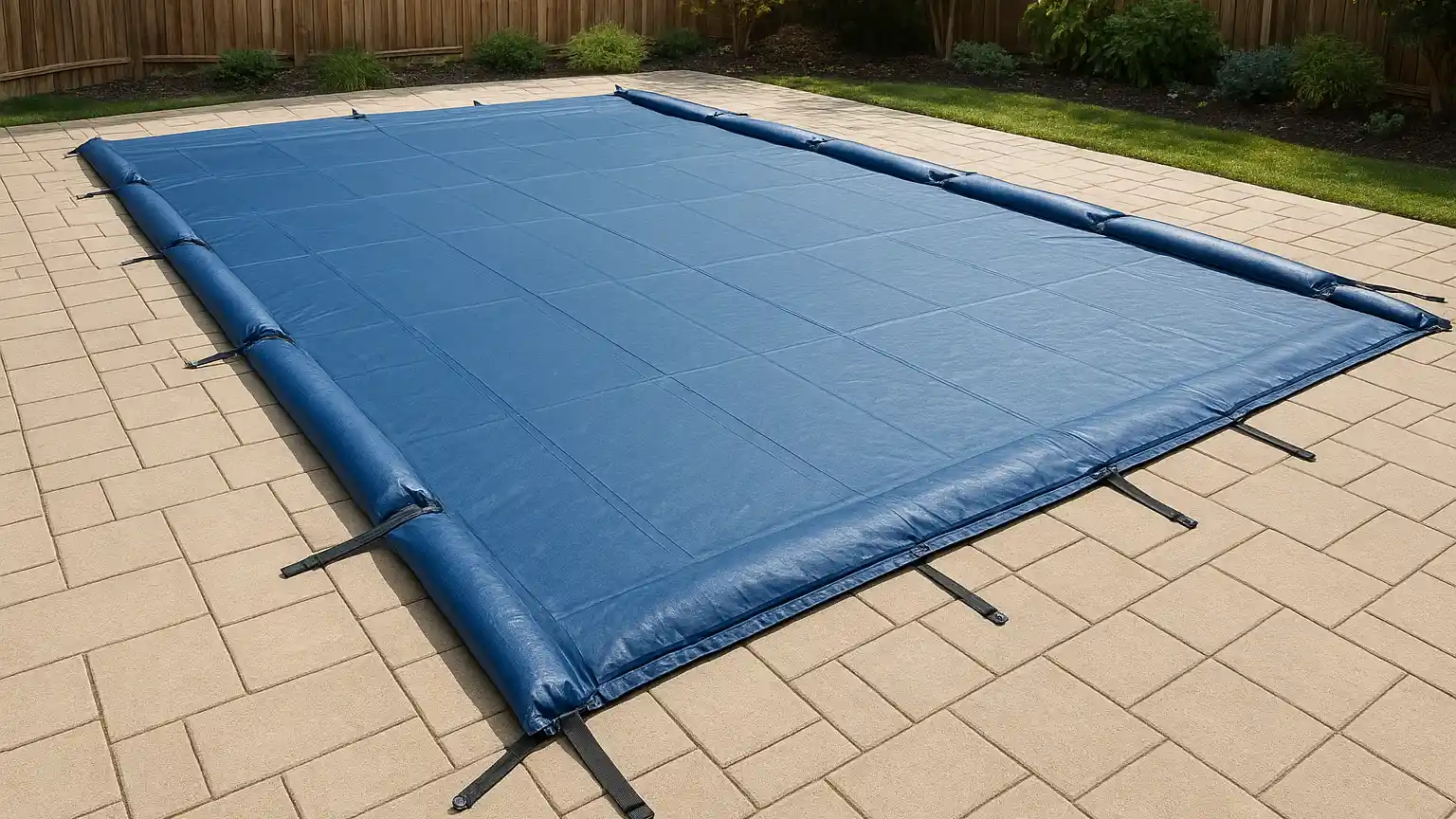
These anchor into the deck and block nearly all sunlight, which starves algae. Rain and snowmelt pass through, so the water level rises and you may need to pump some off. Fine silt also passes through, so expect cloudy water at opening. The tradeoff is real safety for kids and pets, plus no water sitting on top.
Solid Covers
Solid covers keep dirt and rain out entirely, so the water underneath usually stays clearer. The catch is that they need a cover pump running through the season. Standing water gets heavy fast, and a sagging cover pulls anchors, tears seams, and dumps everything it collected straight into the pool.
Warm Climate Pools That Stay Open
Plenty of pools in mild regions never close at all. There the strategy shifts to freeze protection instead of shutdown: set the freeze sensor on your automation to kick the pump on around 37 degrees and keep water moving through the cold snap, because moving water is far harder to freeze than still water. Homeowners in these areas often lean on the tactics in this piece about how to keep pool from freezing during unexpected cold nights.
Small Details People Forget
- Remove ladders, rails, and diving boards, then store the anchor sockets with plugs and grease.
- Pull automatic cleaners out of the water. Cold makes their parts brittle.
- Drain and store the booster pump if you have one.
- Cap the light niche cord slack loosely and leave lights in place, submerged.
- Photograph your equipment pad before disassembly. Reassembly in spring gets much easier.
Spring Reopening Without the Green Panic
Most green-water openings are not chemistry failures. They are sequence failures. People uncover, fill, and dump chlorine in all at once, then wonder why the water turns the color of pea soup by day three. Work in this order and the pool comes back fast:
- Clean the cover first. Pump off standing water, sweep debris, then remove the cover slowly so nothing slides in. Wash, dry, and store it.
- Fill to normal level before you reinstall anything. Water in the pool means water available to prime.
- Reinstall plugs and equipment, using your photos. Fresh gaskets and a light coat of silicone lubricant prevent leaks.
- Prime and start circulation before adding a single chemical. Circulation is what makes chemicals work.
- Test, then balance alkalinity and pH before chlorinating. Shocking water with pH at 8.2 wastes most of the chlorine.
- Shock, then run the filter 24 hours and brush everything. Clean or backwash as pressure climbs.
Expect cloudy water for a couple of days as dead organics filter out, though if it lingers past 72 hours you may be looking at the same issues described in posts about is my pool still cloudy? and the filtration problems behind it.
Signs You Should Call Someone
Call a professional if the pump will not hold prime after two attempts, if pressure readings are unusually high or low, if you hear grinding at startup, or if the water level drops more than a quarter inch a day with the pump off. Those are plumbing and mechanical symptoms, and guessing at them tends to get expensive. Technicians at H2O Pool Service consistently point out that early diagnosis on a suspected freeze crack costs a fraction of what a peak-season emergency does.
Your Pool's Year, Start to Finish
Owning a pool well is really about respecting timelines. The first month set the surface for its entire life, which is why the break-in care from first 30 days decide everything mattered so much. The weekly habits kept chemistry from turning aggressive and equipment from working itself to death. Seasonal transitions close the loop, protecting everything underground and on the pad that you never see until it fails.
None of these steps are hard on their own. What makes the difference is doing them on schedule instead of in reaction. Balance the water before you close it. Get every drop out of the plumbing. Pick the cover that matches your yard and your patience level. Open in the right order in spring. Do that year after year and your pool ages slowly and gracefully, staying the thing you built it to be instead of a running list of repairs.
Recent Posts